Queen Mattress Protector in Off White
- Queen
- 5 sides, fitted
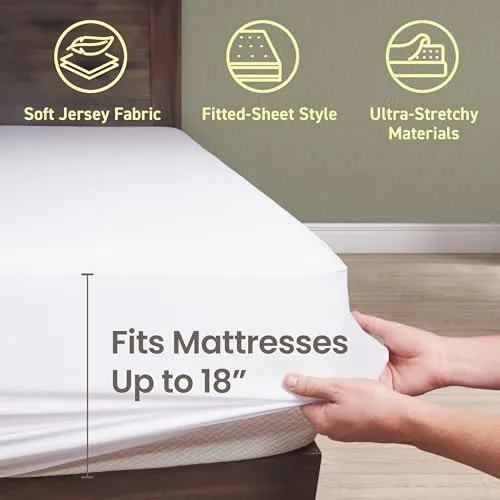
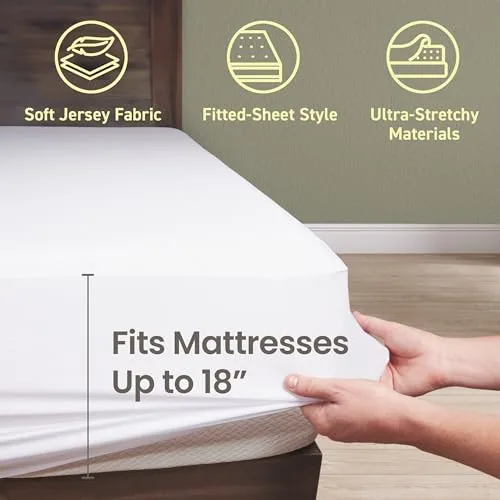
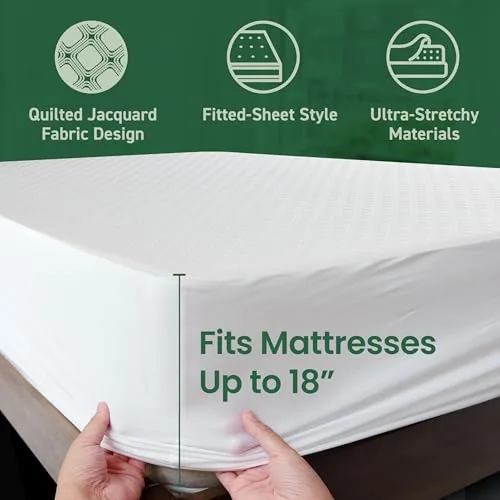
- Fits up to 18 in
- Queen
- Twin
- King
- Full
- California King
- Twin XL
- +1
bamboo viscose, waterproof back, quiet face
$39.994.6 out of 5
Fit
On this page
More covers come back over depth than over anything else, and almost none of those returns are a fault. A queen encasement fits a queen mattress. It fits a queen mattress of a particular thickness, and nobody says the second half out loud.
Bed size is a footprint: length and width, standardised, printed on the mattress label. Queen is 60 by 80 inches in every shop in the country.
Depth is how tall the mattress is, and nothing standardises it. A thin foam mattress can measure eight inches. A pillow-top pocket spring can pass eighteen. Both are queens.
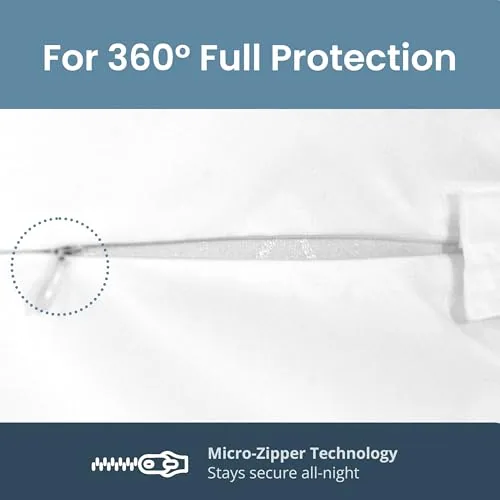
A fitted protector absorbs some of that spread, because the skirt stretches and the elastic pulls it under. A zip absorbs none of it. It is a fixed length of teeth that has to travel round the mattress and meet itself, and two inches of extra foam is two inches it does not have.
That last line matters. A cover cut for nine to twelve inches on a mattress that measures twelve will close, and it will be tight enough that the zip pulls at the corners every time the bed moves. The band above it costs the same and lives longer.
Our zippered covers are cut to depth bands rather than sold as one stretchy size. The table below is the whole ladder, counted from the range as it stands today.
| Band | Covers | Sizes held |
|---|---|---|
| up to 9 in | 5 | Twin, Twin XL, Full XL, Queen, California King |
| 6-9 in | 2 | Twin, Full |
| 9-12 in | 5 | Twin XL, Full, Queen, King, California King |
| up to 15 in | 1 | Crib |
| 12-15 in | 3 | Full, Queen, King |
| up to 18 in | 11 | Crib, Twin, Twin XL, Full, Queen, King, California King |
| 15-18 in | 2 | Queen, King |
The bands overlap the way shoe sizes overlap. If your mattress lands inside two of them, either will close, and the deeper one leaves the zip working less hard.
Read the band in the name before the size. That is the number people skip, and it is the number that decides whether the zip meets.
$34.994.6 out of 5
A three-inch memory foam topper on a fourteen-inch mattress makes a seventeen-inch bed. People measure the mattress, order for fourteen, and then discover the cover has to hold both, because the topper lives under the sheet and above the mattress.
There are two honest answers. Order for the whole stack, which means measuring with the topper on. Or leave the topper outside the cover and buy it its own protector, which keeps the encasement sized to the mattress and gives you a washable layer where the spills land.
For a bed bug problem, the first answer is the right one. Anything left outside the cover is left outside the seal, and a foam topper is somewhere to hide.
A five-sided protector that keeps riding up a corner is not usually defective. It is usually on a mattress deeper than its skirt.
The skirt has to reach past the widest part of the mattress before the elastic can pull inward and hold. Stop it short of that point and every movement in the night walks it up. Our deep-skirt protectors reach a mattress up to 18 in, and that covers most pillow-tops.
Two things make it worse and are worth ruling out first. A protector washed hot loses elastic, and a mattress with rounded quilted edges gives the skirt nothing square to grip.
Five-sided, elastic all the way round, cut for a taller mattress.
bamboo viscose, waterproof back, quiet face
waterproof back
waterproof back, quiet face
waterproof back, quiet face
Nine bed sizes, counted from the catalogue as it stands at the last price update.
| Size | Covers | What it measures | Price range |
|---|---|---|---|
| Crib | 4 | Standard US crib mattress | $15.29 to $34.99 |
| Standard | 1 | Pillow size, not a bed size | $19.00 to $19.00 |
| Twin | 6 | 38 by 75 in | $16.09 to $59.99 |
| Twin XL | 5 | 38 by 80 in, the college bed | $34.99 to $41.99 |
| Full | 8 | 54 by 75 in | $18.89 to $59.99 |
| Full XL | 1 | 54 by 80 in, rare and worth checking | $39.99 to $39.99 |
| Queen | 11 | 60 by 80 in | $13.99 to $89.99 |
| King | 9 | 76 by 80 in | $15.64 to $107.99 |
| California King | 5 | 72 by 84 in, narrower and longer than King | $39.99 to $94.79 |
Where a size shows one or two entries rather than a shelf, that is the honest state of the range and not an oversight of this page. Full XL and Split King are made by fewer people than Queen because fewer beds are that shape.
A standard King is 76 by 80 inches. A California King is 72 by 84. It is four inches narrower and four inches longer, so it is not a size up, it is a different rectangle.
Order a King cover for a California King bed and it will go on, sag across the width and leave the last four inches of the foot uncovered. The reverse is worse: a California King cover on a King will not reach across at all.
Every page here names the size in full for that reason. When the label on your mattress says Cal King, take it at its word.
Crib covers are the easiest fit in the range, since crib mattresses barely vary. They are also the one place where fit is a safety question rather than a laundry one.
The federal safe sleep guidance describes the surface a baby should sleep on, and the description leaves no room for slack fabric.
“A safe sleep environment for baby is:Firm (returns to its original shape quickly if pressed on)Flat (like a table, not a hammock)Level (not at an angle or incline) and covered only with a fitted sheet”
So a crib cover goes on taut, under the fitted sheet, with nothing loose and nothing rucked. If it does not sit flat, it is the wrong size, and the answer is the right size rather than a tuck.
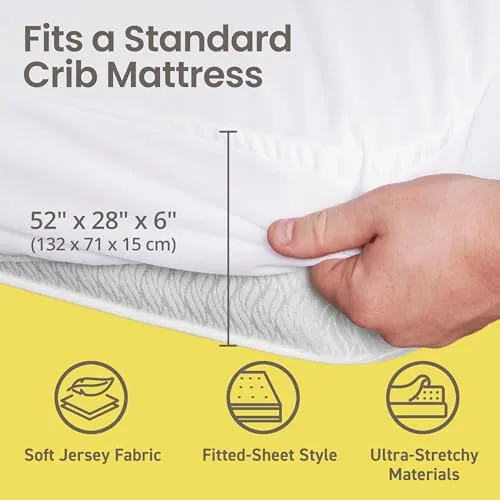
Crib size, five-sided, waterproof. It belongs under the fitted sheet and nowhere else in the cot.
$15.294.5 out of 5
A fitted protector bends with an adjustable base and stays where it is, since the elastic keeps tension through the hinge.
An encasement also flexes, with one thing to expect: the zip runs along the side, and the side is where the mattress folds. Raise the head and the fabric bunches along that line. It does not damage the zip, and it does look untidy.
Split King beds take two Twin XL covers, one per half, and not one King cover across both. That is the same rule for sheets, and it catches people out for the same reason.
If the zip will not meet, stop pulling. Forcing a zip round a mattress that is too deep tears the tape out of the fabric, and then nothing can be done with it.
If the cover is too deep instead, it will close and gather at the foot. That is cosmetic and it will not affect the seal. Live with it or size down at the next replacement.
If you are between two bands and the bed has any life left in it, take the deeper band. Mattresses do not get thinner, and a topper turns up in most houses eventually.
The whole point of this page is a tape measure and one minute. That minute is cheaper than a return, and quieter than a mattress on its side at bedtime.
SafeRest makes bedding barriers in two shapes. SafeRest fitted mattress protectors go on like a fitted sheet and take the spill. SafeRest zippered encasements zip closed on all six sides and seal. Between them we cover 9 bed sizes and 50 products.
Working through a problem rather than a product? Our guide to five sides or six sets the two shapes side by side with the federal wording on covers that seal. The SafeRest guide to depth and fit explains why a zip that will not close is a measuring error rather than a manufacturing one, and the dust mite guide covers the washing half of the job.
The rest of the bed matters too: SafeRest pillow protectors for the item that touches a face all night, SafeRest box spring encasements for the hollow wooden base underneath, and SafeRest padded protectors where a mattress has gone hard and needs some loft back.